Fleet & Commercial
Semi, Box Truck, and Fleet Glass Across the Las Vegas Valley
Commercial glass isn't a bigger car windshield
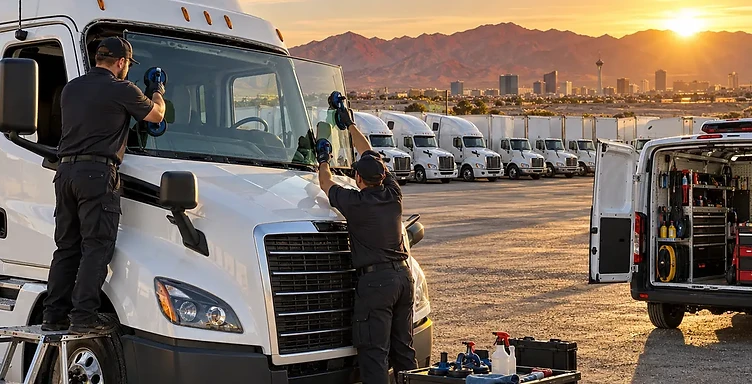
It's a different job. Heavy trucks often run two-piece windshields, where each side is a separate flat or lightly curved laminated panel set into a rubber gasket rather than urethane-bonded like a passenger car. Class 7 and 8 glass is heavy enough to need two techs and the right cups to handle safely, and the cab structures on a Freightliner, Peterbilt, International, Kenworth, or Hino each have their own quirks around the seal and the pinch area.
Box trucks, cargo vans, and work vans sit somewhere in between, and newer units increasingly carry forward-facing cameras that need recalibration after a replacement, same as any passenger vehicle. Shops that only do cars tend to quote these slowly or not at all.
Damaged glass is an inspection problem, not a cosmetic one
This is the part that turns a nuisance into a cost. Federal motor carrier rules restrict damage in the area of the windshield swept by the wipers — small chips are tolerated within limits, but cracks in the driver's field of vision and damage that intersects other damage are the kinds of findings that generate a violation at roadside or at annual inspection. The specifics are worth confirming against the current regulation and your own inspection program, because the margin between "fine" and "written up" is narrower than most drivers assume.
The practical version: a crack you've been living with since summer is a line item waiting to happen, and it's cheaper to clear it on your schedule than on an inspector's.
Downtime is the actual expense
The glass is rarely the biggest number on the invoice. A truck that has to deadhead to a shop, wait for a bay, and deadhead back has burned most of a day, and that's a day of missed loads or missed service calls against a driver you're still paying. Multiply by a handful of units and the glass cost stops being the thing you're optimizing.
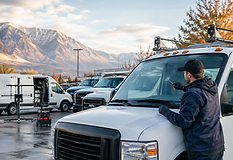
That's why we come to the yard. We handle semi, box truck, cargo van, and light-duty fleet glass on-site, which means the unit is worked on where it already sits — between shifts, overnight, or during a scheduled down window — instead of coming off the board.
Across the whole valley
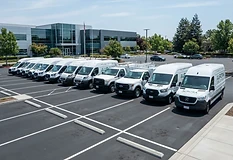
We service Las Vegas, North Las Vegas, Henderson, Paradise, Spring Valley, Enterprise, and Summerlin, including yards along the I-15 corridor and the 215 Beltway. For operations running multiple units we'll do a walk-through and log every chip and crack across the fleet in one visit, then schedule the work in batches rather than one truck at a time.
Why now
Two reasons October and November are the right window. Q4 is when most operations still have budget to spend and a clear picture of what's left in it, and glass is an easy line to close out before it rolls into next year's numbers. And anything running I-15 north out of the valley — toward Mesquite, St. George, and into Utah — is about to start crossing into real winter conditions, where a chip that sat harmlessly through the Mojave summer meets freezing nights and a defroster on high.
Call us for fleet pricing and we'll put a standing inspection schedule together.