
Fleet & Commercial
Fleet Glass Before the First Storm: Why September Is the Right Time

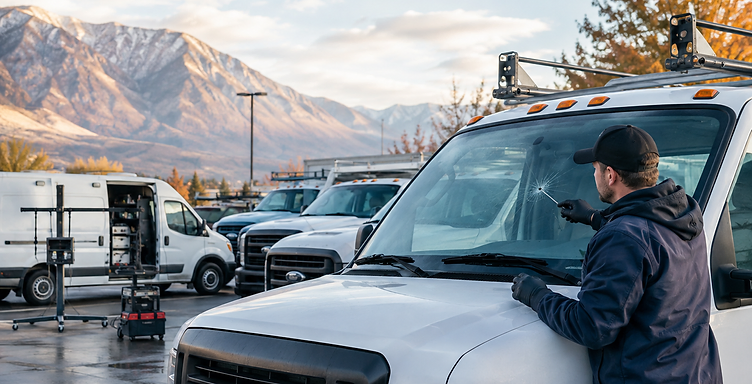
The cheapest repair is the one you do in September
Right now, a rock chip on a box truck or service van is a 30-minute mobile fix in your own yard. Come January, that same chip has spent three months absorbing freeze-thaw cycles and blasts of hot defroster air against ice-cold glass — and it's a crack running the width of the windshield, a failed safety inspection, and a vehicle you can't dispatch. Glass damage doesn't get better sitting on a truck through a Wasatch Front winter. It gets worse on a schedule you don't control.
What changes on the road once the weather turns
Along the Wasatch Front, UDOT crews start running salt brine and sand as soon as the first storms move through the Salt Lake Valley, and every vehicle behind a plow on I-15, I-80 over Parleys, or SR-201 is driving through airborne grit. Add canyon runs to Park City or Ogden and your windshields are taking impacts they simply don't take in July. Las Vegas fleets get a pass on the snow, but not on the problem — anything running I-15 north toward Mesquite, St. George, or into Utah crosses into real winter conditions, and vehicles that live in Mojave sun all summer already have pitted, heat-stressed glass that's primed to fail when the temperature swings.
A one-morning fix while it's still easy
The move is simple: walk the yard this month and log every chip, star, and edge crack across the fleet, then knock them all out in one mobile visit before the first freeze. We come to your yard or job site, so you're not surrendering vehicles to a shop bay one at a time during your busiest quarter. Anything that needs full replacement gets ADAS recalibration handled on-site the same day, so lane-keep and emergency braking systems come back correct instead of getting flagged later. If you run a fleet anywhere across Utah or the Las Vegas metro, reach out for volume pricing and a standing inspection schedule — it's a lot cheaper than pulling trucks out of service in February.